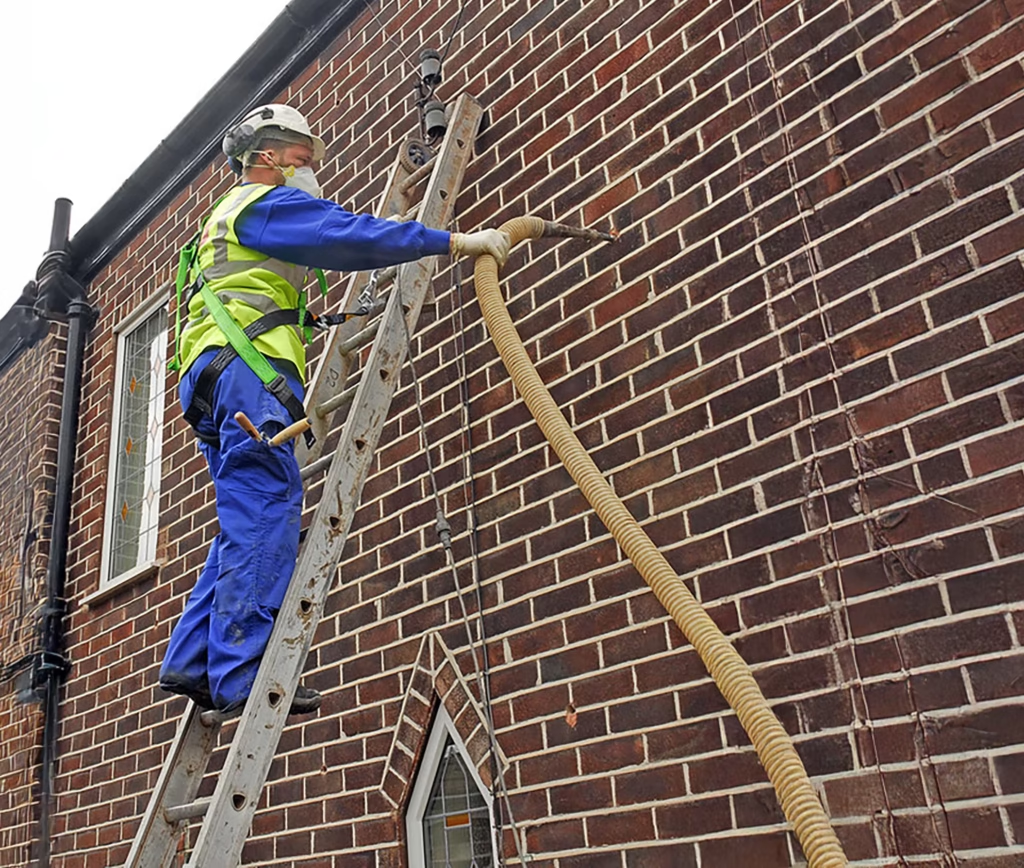
Cavity Wall Insulation (CWI) is one of the most common energy efficiency measures found in UK homes. For decades, it was installed in millions of properties, often for free or at a very low cost under various government grant schemes.
When it works well, it is excellent. It acts as a thermal blanket wrapped around your home, reducing heat loss by up to 35% and making the house feel significantly warmer.
But there is a flip side. When cavity wall insulation fails or when it is installed in a property that was never suitable in the first place it can cause ongoing misery. We regularly visit homes where owners are battling persistent damp, cold spots, and mould, unaware that the “upgrade” hidden inside their walls is the culprit.
Understanding the warning signs of cavity wall insulation problems, why they occur, and what steps to take can save you from years of frustration and thousands of pounds in wasted heating costs.
What cavity wall insulation is designed to do
To understand why it fails, we first need to understand how it works.
Most homes built after the 1920s were constructed with cavity walls. This means there are two layers of brickwork (leaves) with a gap (cavity) in between.
- The original purpose: That empty air gap was designed to stop rain from soaking through to the inside. If water penetrated the outer brick, it would run down the inside of the cavity and drain away, keeping the inner wall dry.
- The insulation: Retrofit insulation involves injecting material (mineral wool, polystyrene beads, or expanding foam) into that gap to stop heat escaping.
When correctly installed in a suitable home, the insulation traps heat but still allows the wall to manage moisture. When it fails, it acts like a bridge, carrying rainwater from the outside straight to your plasterwork.
Warning sign 1: Cold patches on internal walls
One of the most common signs of insulation failure is uneven wall temperatures.
If you run your hand across a wall, it should feel relatively uniform in temperature. However, if the insulation has “slumped” (common with old mineral wool) or if the installer missed sections (leaving “voids”), you will feel distinct cold patches.
- The Sensation: It might feel like a draft is coming through the solid wall.
- The Consequence: These cold spots attract condensation. Warm, moist air from your home hits the cold brickwork and turns to water, creating localised damp patches that don’t seem to have an obvious leak source.
Warning sign 2: Damp patches or mould (The “Bridge” Effect)
This is the most distressing symptom. You might notice damp patches appearing in odd places often in the middle of a wall, low down near skirting boards, or around window reveals.
This usually happens because the insulation has become saturated. Think of it like a sponge. If you put a dry sponge in the cavity, it insulates well. If you put a wet sponge in the cavity, it not only stops insulating, but it also physically transfers water from the wet outer wall to the dry inner wall.
Key Indicator: Does the damp get worse after heavy storms or driving rain? If so, it is likely “Penetrating Damp” bridging across the insulation.
Warning sign 3: Rising heating bills without lifestyle changes
“I haven’t changed my habits, but the house feels colder.”
Insulation materials rely on trapping air. If the insulation gets wet, the air pockets fill with water. Water is a conductor, not an insulator.
- The Result: Your wet insulation is actually sucking heat out of your house faster than an empty cavity would.
If your boiler seems to be running constantly just to maintain 20°C, and your walls feel cold to the touch, your insulation may have failed.
Warning sign 4: Condensation forming on walls
We are used to seeing condensation on windows (glass is cold). But seeing condensation forming on a painted wall or wallpaper is a major red flag.
This indicates that the surface temperature of the wall has dropped significantly often due to a gap in the insulation behind it. This is frequently seen in corners or at the junction between the wall and the ceiling, where installation is tricky and often rushed.
Warning sign 5: Musty or persistent odours
A persistent “wet dog” or musty smell that doesn’t disappear with ventilation is often the smell of wet building materials.
If the insulation material (especially old formaldehyde foam or mineral wool) is sitting wet inside the wall, it can begin to break down or simply stay damp for years, releasing that tell-tale odour into the room through floor voids or electrical sockets.
Common causes of cavity wall insulation problems
Cavity wall insulation does not fail randomly. It fails for specific, physical reasons.
1. Rubble in the Cavity
When houses were built, bricklayers often dropped mortar snots and broken bricks down the cavity.
- The Problem: When insulation is injected, it hits this pile of rubble at the bottom and stops, leaving a large void.Worse, the rubble acts as a bridge for damp to cross over.
2. Unsuitable Location (Exposure Zones)
The UK is mapped into “Wind Driven Rain Exposure Zones.”
- The Risk: If you live on the rainy west coast of Wales or Scotland, or in a highly exposed coastal area, your home may never have been suitable for certain types of CWI. The driving rain forces water through the brickwork,overwhelming the insulation. Many homes in these “Severe” zones were insulated inappropriately during government grant rushes.
3. Dirty Wall Ties
The metal ties holding your walls together can catch mortar droppings (“snots”) during construction.
- The Problem: The insulation gets caught on these snots, creating air pockets and voids. These voids become cold spots, leading to condensation patterns on your interior walls that look like spots.
4. Degradation of Old Materials
Early foam insulation (from the 1970s and 80s) can shrink and crack over time. Old mineral wool can settle under its own weight, leaving the top half of your walls completely uninsulated.
Why diagnosing the problem matters
The danger here is misdiagnosis. We often see homeowners buying expensive dehumidifiers or paying for “damp proofing injections” (chemical DPC) when the real problem is the wet fluff inside the wall.
Treating the symptom (painting over the mould) without treating the cause (the wet insulation) is a waste of money. You need a Cavity Wall Borescope Inspection. This involves drilling a small hole (size of a coin) and inserting a camera to look inside the wall.
What solutions might involve: Extraction
If your insulation is wet, slumped, or bridging damp, there is usually only one solution: Extraction.
You cannot dry out wet insulation while it is trapped inside a brick wall. It must be removed.
- The Process: Bricks are removed at the bottom of the wall. Compressed air is blown into the cavity from the top,and a giant industrial vacuum sucks the old insulation out from the bottom.
- The Result: The cavity is clear again. The walls can finally dry out (which may take months). Once dry, you can decide whether to leave it empty or refill it with a modern, waterproof system (like bonded beads).
Why order matters again
If you suspect CWI failure, do not install a Heat Pump or internal wall insulation yet.
- If you insulate internally over a wet cavity, you will trap that moisture in the structure, leading to rotting joists.
- If you install a heat pump, the heat loss from the wet walls will make it expensive to run.
Fix the fabric first.
Cavity wall insulation as part of a whole-home approach
Cavity wall insulation interacts with ventilation. When the cavities were filled, the natural breathability of the house was reduced. If the installers did not add vents (such as combustion vents for fires or trickle vents for windows), the internal moisture builds up.
Sometimes, the “damp” isn’t the insulation’s fault it’s a lack of ventilation. A Whole House Assessment can tell the difference.
Common misconceptions to avoid
- Myth: “All cavity walls should be insulated.”
- Fact: Some should be left empty to breathe, especially in wet climate zones.
- Myth: “If I have a guarantee (CIGA), it will be fixed easily.”
- Fact: Claiming on guarantees can be a long process requiring proof of failure.
- Myth: “Damp always means rising damp.”
- Fact: True rising damp is rare. Penetrating damp from failed insulation is much more common in retrofitted homes.
What homeowners can do next
If you are reading this and nodding along recognising the cold spots, the musty smell, or the bills that don’t make sense don’t panic. But do act.
Leaving wet insulation in a wall can eventually corrode the wall ties (the metal holding your house together), leading to structural issues.
The most useful step is to seek clarity. You need an independent assessment someone who isn’t trying to sell you moreinsulation, but who can diagnose the health of what you already have.
Taking the next step
Cavity wall insulation is fantastic when it works but when it fails, it needs professional attention.
If you’re unsure whether your insulation is working or causing damage, you can book a free, no-obligation conversation with our team. We can help you arrange a borescope inspection and get to the root of the problem.
Let's make things happen
Tell us about your home and we’ll join up the right energy upgrades so everything works as one simple plan.


Ready to take the first step?
Start your journey to a cosier more efficient home
Fill out the quick form below, and a member of our team will get in touch with information on how the service works and the next steps.